The Palestinian Center holds a workshop on "The role of reconciliation figures in strengthening juvenile justice in the Gaza Strip"
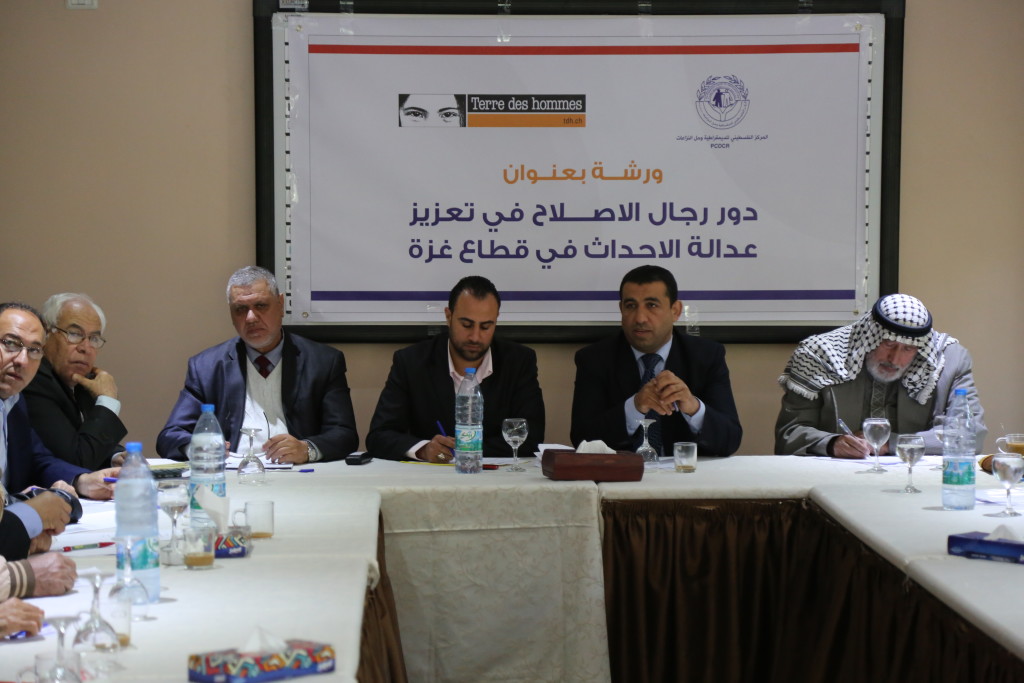
The Palestinian Center held a workshop entitled "The role of reconciliation figures in strengthening juvenile justice in the Gaza Strip", as part of the events of the juvenile justice project funded by Terre des hommes Switzerland, which aims to provide legal and social services to juveniles in conflict with the law and to do everything necessary to secure the best interests of juveniles. The workshop discussed a paper on "The role of reconciliation committees in dealing with juvenile cases", presented by Mukhtar Mohammed Anaba, and also addressed restorative justice and the need to apply it, in a paper presented by Mr. Younis Al-Tahrawi, coordinator of the legal unit at the Palestinian Center. The workshop produced a number of recommendations, as follows: activating the role of reconciliation figures in preventing crime before it occurs, by observing children's behaviour and addressing the causes that may lead to delinquency, such as poverty and the lack of adequate housing. Strengthening the state's responsibility to attend to juvenile cases across all aspects of economic, social and cultural life. Working to ensure that reconciliation figures observe the balance of power between the disputing parties in the reconciliation process. The need for police officers to contact reconciliation figures as soon as a complaint or problem arrives, to prevent the problem from escalating and to limit the possibility of its reaching the public prosecution. The need for the judge to see the juvenile as a victim of society, not to sentence them to imprisonment or a fine, and to be content with placing the juvenile under the supervision of a family member of good character, or, where there is no such family member, under the supervision of a probation officer at the Al-Rabee institution. The need to amend the laws relating to juveniles so that they are consistent with modernity and development and so that juveniles are treated, by the text of the law, as victims rather than criminals. The way juveniles are dealt with must differ from the way adults are dealt with, and they should have their own distinct clothing at the Al-Rabee institution. The need for a dedicated juvenile police force in the Gaza Strip with the knowledge and skills to deal with juveniles, wearing civilian clothes. The state should create recreational places for children to release their energy and use their free time in ways that benefit them and keep them from falling into crime. Working to develop the skills of reconciliation figures in handling juvenile cases, through training and knowledge of the laws that concern them. Social security must be provided to the head of the family so that he can meet the basic needs of its members. The need for awareness projects for fathers and mothers about their role in protecting children and preventing them from falling into crime, and the need to activate the role of religious figures in mosques in spreading a culture of tolerance and good character in order to prevent delinquency. Working to separate juveniles from adults in places of detention, and ensuring that trials are held swiftly so that we protect our children from crime.