The Centre begins carrying out the project for developing the delivery of civil services in line with the principles of transparency and effectiveness
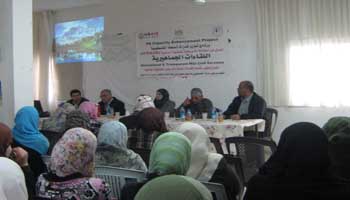
Nablus: the Palestinian Center for Democracy and Conflict Resolution, in cooperation with the Ministry of Interior, has begun carrying out the project for developing civil services in line with the principles of transparency and effectiveness, within the activities of the programme for strengthening the capacities of the Palestinian Authority funded by the United States Agency for International Development (USAID). This project aims at improving the procedures for delivering services at the Ministry of Interior's offices and at building the capacities of the ministry's staff in serving citizens, through the results of open dialogues between the public and the ministry's officials. This improvement is expected to show in the manner and method of the service the interior staff provide to Palestinian citizens and to those visiting the departments, and likewise to show in all the administrative and organisational practices that would be reflected positively in the manner of the service and the way Palestinian citizens and visitors to the departments are dealt with. This project targets four governorates in the West Bank: Nablus, Tulkarm, Bethlehem and Hebron. Ahmed Abu Ayyash, the project director, mentioned that the project began by carrying out a set of individual interviews with citizens in front of the interior offices in the governorates mentioned, in order to learn the problems and obstacles facing the Palestinian citizen while receiving the service from the Ministry of Interior's offices, on the path to improving the manner of the service and of dealing with the citizen. And in order to learn more about the problems facing the Palestinian citizen while receiving the service, the Palestinian Center for Democracy and Conflict Resolution is also holding a large set of public meetings bringing together senior staff of the interior offices in the governorates mentioned with citizens to discuss, examine and study the problems and find solutions to them. At a later stage a set of radio programmes is expected to be held in the governorates mentioned, which would give the Palestinian official the opportunity to engage with the citizen regarding the nature of the services provided to the public, particularly passports and civil status. These meetings will be followed by a set of training sessions to be delivered by a group of experts and professionals on various subjects and topics, which would help improve the manner of the services the ministry provides to the Palestinian citizen at its various locations, noting that the outputs and results of this project will be presented to the officials at the Ministry of Interior for a full discussion of all the problems that have emerged through this programme and to find appropriate solutions to them. Abu Ayyash noted that within this project a public meeting was held in Idhna in Hebron, attended by more than a hundred male and female citizens from the town, and with the citizens was Mr. Kayed Jaradat, director of the Hebron interior office, and another group of the office's staff, who answered citizens' questions and queries about the services provided to them regarding passports, civil status, family reunification cases and other matters of concern to the citizen. In this framework another public meeting was held in Nour Shams camp in Tulkarm, attended by more than eighty people, and with the citizens was Mr. Abdullah Al-Danna, director of the Tulkarm interior office, who, along with the rest of the interior staff present at this meeting, answered citizens' questions and queries. The citizens praised these events and activities, which brought them closer to the Palestinian official and helped them understand many of the matters relating to the services of the interior offices concerning passports and civil status, and the public called for more of these events and meetings.