The Coalition of Civil Forces discusses women's role in planting a culture of tolerance for Palestine's generations
Gaza, Publication and Information Unit:
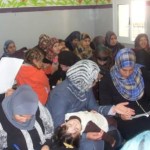
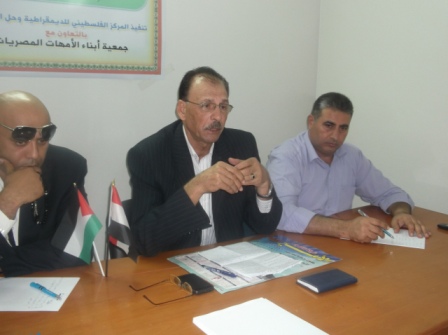
The Coalition of Civil Forces for Civil Peace at the Palestinian Center for Democracy and Conflict Resolution discussed the role of Palestinian women in strengthening a culture of tolerance and respect for differing views among the rising generations in Palestinian society. These discussions took place during a workshop held by the coalition in partnership with the Sons of Egyptian Mothers Association, with the participation of 15 women and community activists at the association's premises in Gaza City.
The field coordinator of the Coalition of Civil Forces for Civil Peace, Fayez Zaqout, pointed out that the Palestinian Center for Conflict Resolution works to involve as many groups of the local community as possible in making community reconciliation efforts a success. He called for intensifying direct meetings with the public, which allow awareness to grow of the importance of accepting others, particularly among young people and students in their homes, schools and universities, so that we reach an environment that respects others and values their achievements, as he described it.
For his part, the media professional Mohammed Al-Baz, "Abu Shadi", reviewed the role of Palestinian and Egyptian women in liberating the land of Palestine, by refining and raising children on the principles of belonging to the homeland and its people away from party allegiance. He praised the earnest efforts of the Conflict Resolution Center in supporting national reconciliation efforts and ending the political division between two important parts of the homeland.
Al-Baz explained that the woman who gives her blood and her spirit to her homeland is able to give and plant tolerance and love among her children, which will be reflected positively in the prevalence of civil peace in society, adding: "We have felt the harm of the legacy of the division in its negative effects on every aspect of life, politically, economically and educationally, which has affected social relations between people in the form of resentment, hatred and an inability to listen to differing views."
The women taking part called for giving national interests precedence over any party interest and for holding a number of educational meetings for their sons and daughters so that they can benefit from successful experiences that embody the meanings of dialogue and understanding with others within Palestinian society, and for guiding the public through meetings and media programmes that stress the importance of dialogue in strengthening social relations between people.