Crowded, oh world, crowded: crowded, and mercy is no more
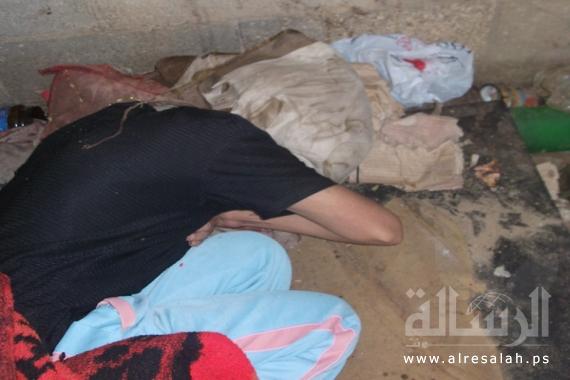
These are words sung by one of Egypt's popular singers to express the state of chaos and crowding in Egypt. He wanted to say that the crowding had touched everything, even people's emotions, so that mercy was absent and pity was absent from their hearts. We used to repeat these words with a certain irony and criticism whenever we passed through a crowd in one of Gaza's squares, but today, with every regret, we say them in the face of a state of unprecedented violence in our society, in the face of a human brutality of which the least that can be said is: what injustice a human being does to his fellow human being, when a person becomes more hideous than the devil. Perhaps, with all the eloquence and all the old and new terms we possess, we cannot describe what was going through the mind of the victim of her brothers and of inheritance, if the expression is permitted, when the psychological support team of the Palestinian Center for Democracy and Conflict Resolution visited her at the psychiatric hospital and found her sitting in the position of a foetus, holding an egg in her hand and trying to eat it as it was, without peeling it. Do not be surprised, for this is what she knows and what she learned by instinct during the period of her forced detention for more than 14 years, by decision of the court of her brothers, on the charge that she is a woman who does not deserve to obtain her rights and does not deserve to live like others, because she demanded her rights from her father's inheritance. Her whole crime before the court of her brothers was that she said: I want my right. So the judge, the executioner and those present stood up and all sentenced her to banishment and a slow death, and everyone bore witness to the crime and signed it with the seal of family ties. They placed the victim in the keeping of the one called her brother, who accordingly provided her with a chicken coop to live in, since he begrudged her the main room because his daughter had more right to it than she did. The story does not end here; rather it was the beginning of a journey of suffering that lasted more than 14 years, during which the girl was absent from the world and lived in her own world among the scrap and the remains of old pieces the family threw into the storeroom, which made up the victim's family and her companions throughout that period, so that there came to be a great resemblance between her features and the features of the old bed and the plank of wood thrown carelessly into the corner of the shack. A summer blouse was her companion in every season, soaked with all the fear and suffering for more than fourteen years. Her fingers had stiffened with the cold, and her weight, no more than 20 kilos, was all she had managed to gather over the fourteen years, so that she became the size of a small child curled up on itself. Fourteen years in which the victim lived cut off from the world, knowing no voice but her own and seeing nothing but some beasts who came at times to make sure she was dead. But God's will and mercy were stronger than all of them, and the victim lived and the matter came to light, so that her screams, which the neighbours complained of so often, remain a curse pursuing everyone without exception. A curse on the beasts, on the absent government and on civil society in all its colours and shades. Where were they, and what are their jobs and what is their role? Is it because the population of the Gaza Strip is more than a billion people, for instance? Or because the area of the Gaza Strip is millions of square kilometres? Or is it that the man in charge secured safety and security in his own house and so went out reassured about every member of his family, with no concern for the houses of those in his care? Where is the role of the civil society organisations that demand an end to violence against women? Did the hand of justice fall short in confronting a criminal who made the forbidden lawful? Or was the sight of the cameras too weak to cover the events in full, they who run after our misfortunes and our scandals? Many are the questions the team of the Palestinian Center for Democracy and Conflict Resolution read in the eyes of one of society's victims, indeed one of the victims of worn-out customs and traditions. Many are the questions we put before the officials and those among them with a conscience, and we cry out to them: wake from your sleep and bear your responsibilities so that we are not shocked once again by another victim, and how many of them there are, sadly. And if you do not know whom we are speaking about, look through the pages of the newspapers and at the society pages to learn the story of the Gazan girl whom her brother imprisoned for more than 14 years so that he alone could take her inheritance from her father. And the last question remains: what is the punishment for everyone who took part in this crime? And will we be shocked tomorrow by his release on bail because the law provides for that, and will we find the legal and social justifications that the giants of the law and its men will market to us, amid the absence of a law that guarantees and protects the rights of so many victims?