Because she does not look like her father
|
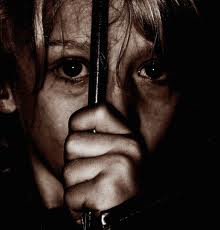
A.T. is a girl in the third grade of primary school. She and her family, made up of three siblings and her mother, live in a small house filled with fear, humiliation and torment at the hands of a monster called her father, because there is no resemblance between the child and her father. Suspicions turned in his head and became certainties that she was not his daughter. In the words of her aunt, who describes for us the scenes of torment her sick sister's family lives through, she says: "My sister's daughter suffered a great deal. From the age of 5 months her father used to put her in the cupboard, beat her and hang her on the wall, and her father used to send her out in the middle of the night to buy him cigarettes from the shop, and if she came back without them he would beat her half to death and swear at her with foul language." The aunt adds: "My sister's daughter used to see her father naked and used to see him watching pornographic films." When we asked her about the child's mother and her role in protecting her children, she said: "My sister is now seriously ill, she is paralysed and cannot move, and she has lost the sight of her right eye from the severity of the pressure, tension and torment she was under." At that point I asked the aunt where she had been through all this, and she said: "We came 10 years ago and my sister married on the advice of some relatives who said he was a good man, and a month later we travelled and only came back once. Her husband used to pretend in front of us that he was fine, but sadly he was a deceiver." She adds: "My sister suffered a great deal. A.'s father used to heat the spoon to burn his daughter, and all my sister could do was take the spoon and put it on her own hand and burn herself so that her daughter would not be harmed." The aunt adds: "Since she was little she has been deprived of eating with her siblings. One time her father brought cherries home and gave each member of the family two, and when he gave them any food he would ask them to eat it in front of him so that they would not feed her in his absence, so all my sister could do was hide a cherry under her tongue to feed it to her daughter." The aunt adds, relaying the mother's words: "My sister's daughter, her mother used to say, would fall ill as a little girl and run a high temperature for no reason, and the mother later learned that the cause was psychological, because her daughter would see a lot of food and be deprived of it, which affected her psychologically and physically." Among the strangest things the aunt said, insisting it was relayed from her sister, was that the husband was sexually deviant and would have relations with the animals in the land surrounding the house, and that on one occasion he brought the donkey inside the house. The aunt learned of the Centre and went to the Family Centre asking for help and protection from her sister's husband, after her father had thrown him out of the house, her sister was in hospital and then travelled to Egypt for treatment, and she was left alone in the house with her sister's children while her father and mother travelled with the sister, and out of fear that he would come to the house at night. It was here that the child protection network intervened. When I met the child and her sister I found her very weak, her body ill and her eyes bewildered, and the shock was that I learned from the child, through the emotional release sessions, that everything the aunt had said was true, and the child added more. In one of the sessions I asked the child to draw her family on a piece of paper, and when she finished her drawing I was surprised that she had not drawn her father. I asked her: "Do you see your family as complete like this?" and she nodded, so I said: "And where is daddy, why have you not drawn him?" She said: "I do not want to draw him", and when I asked her to draw him she was upset by that and turned the paper over and drew him quickly and distorted on the back. When the mother's family came from Saudi Arabia because of her illness she was then transferred to Egypt, and at that time I was intensifying my sessions with the children, particularly the emotional release sessions, and the child had great hope that her mother would return safe from her illness, because she was their only hope. One day I received a call from the aunt late at night, and here was the shock: the children's mother had died of her illness. This required exhausting effort from the specialists with the aunt and the children, and both specialists took turns in holding psychological release sessions for them after the death in particular, which led the aunt to say: "I am much relieved now because I feel that my sister's children will finally have peace, and I hope I can fulfil my sister's wish and provide safety for her children." The next day I asked her to send the children to the Centre, and during the release session A. said to me: "I wished I could tell my mother something and I wished she could hear me. I wished I could tell her, if only she had not died and if only he, her father, had died and been buried instead of her." In truth the situation grew worse with the mother's death and with the approach of the family's departure, out of fear that their residence permit would expire. It was here that the child protection network intervened, in coordination with the SOS children's village, and the four children were moved to the village, where there is accommodation, a school and a dedicated carer inside the village and all their needs are provided for, from food and drink to clothing and toys, that is to say it is entirely self-contained. An undertaking was signed that the father would not come near the school. The aunt then came and said: "Now my sister is truly at peace, and I honestly want to thank you at the Family Centre, because were it not for God and then for you, my sister's children would have been on the street. I hope you will always stay in touch with my sister's children because I am obliged to travel." The specialists made a visit to the children inside the village for further reassurance about the children's wellbeing. |