I do not like playing with strangers
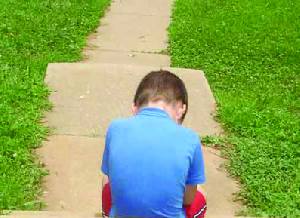
The last war knocked on Gaza's doors one by one and left no house without its mark. In every family you are bound to find the wounded, the martyr, the disabled or someone in a psychological state whose consequences they bear to this day, because of the horror of that war. And although the civil organisations and charitable associations took on many cases and helped them, the great number of those harmed by this war made these organisations overlook a large portion of them, so that people began knocking on their doors. That woman came to this organisation pleading and hoping that we would enrol her child in the project "Our children are our hopes", through which the association seeks to draw a smile on children's lips and to ease their psychological, physical and educational suffering. The project "Our children are our hopes" did not disappoint this woman's hopes; on the contrary we began in practice to help her child. The child Osama, who was born in Tel Al-Zaatar in a camp, lives in a flat that shows the traces of poverty and of the family's poor economic conditions, particularly when it is known that the child's father is unemployed, like thousands of Palestinians, and is unable to do any physical effort, especially as he suffers from heart disease and diabetes. That is on the side of the head of the household, and not only that: he has a child with a mental disability, Osama's eldest brother, who needs special care to include him in society and to ease the burdens on his family. Osama is a child whom anyone who sees him at first glance would almost describe as withdrawn and fearful, since he avoids mixing with the other children, even with his peers, as though they were strangers. This is clearly apparent in his tendency to isolate himself from his peers and not to join them in play, on the grounds that he does not like playing with strangers. To learn more about Osama's situation, the psychological support team made a home visit to Osama's family, and through the visit the team was able to learn at close hand about the family's economic, health and social situation and also about the family's way of dealing with Osama, by putting questions to the family's members and through indirect observation. During the conversation, Osama's mother told us that her son never likes to be absent from the Centre and asks his mother to teach him everything he learns there. In points we set out what the psychological support team did to help Osama emerge from the psychological state he was suffering from (withdrawal, shyness, fear): an individual session was held with Osama to release more of what goes on in his mind, through drawing and talking about his wishes and needs. The psychological support team intensified group activities in which all the children take part, so that Osama could take part with them and exchange his feelings and emotions with them instead of leaving them to form a barrier of fear preventing him from mixing with others. The psychological support team assigned Osama to be the leader of the session and to play with the rest of the group's children, and when he did so he was reinforced, encouraged and supported materially and morally. The great surprise was when Osama began to change gradually, to the point that he told the psychological support team himself: "Do you see, miss, I have started to like playing with the other children." Osama was spoken to about his dreams and ambitions, for like the rest of the children he looks forward to a bright tomorrow educationally, and he answered that he aspires to be a teacher. The child Osama's mother also offered a message of thanks to everyone who contributed and helped Osama to rid himself of the state of isolation and fear he had been suffering from. And so the project "Our children are our hopes" has recorded a brilliant success in improving the educational and psychological level of the child Osama and of others, so that he has become able to get through his school stage and to continue his life in its normal form.