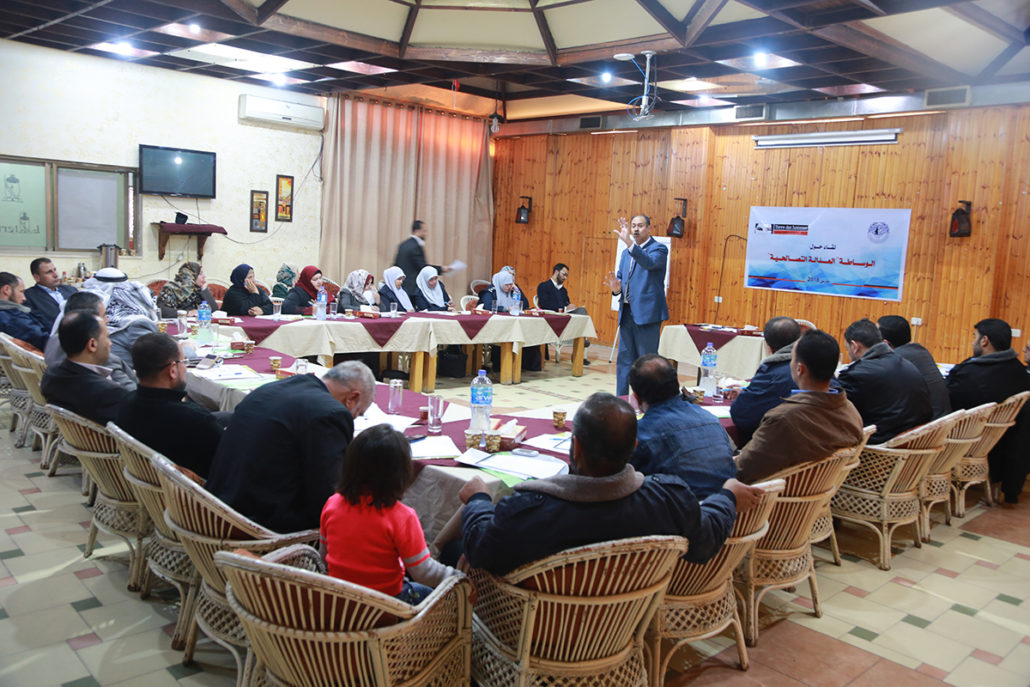
Training meeting on restorative justice (mediation)
Day: Wednesday
Date: 14/3/2018
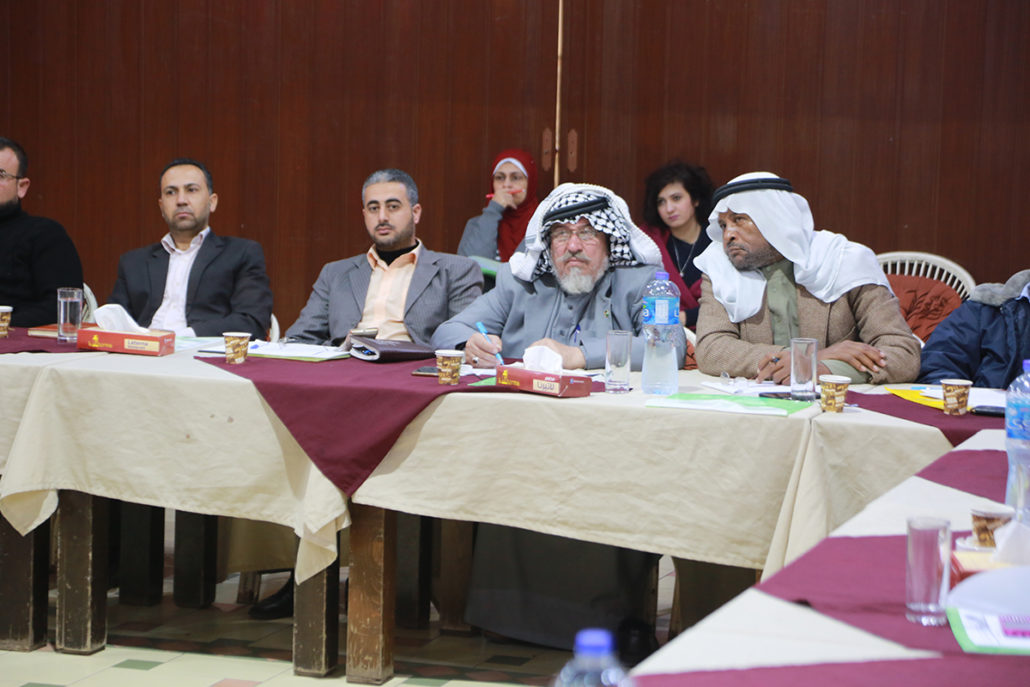
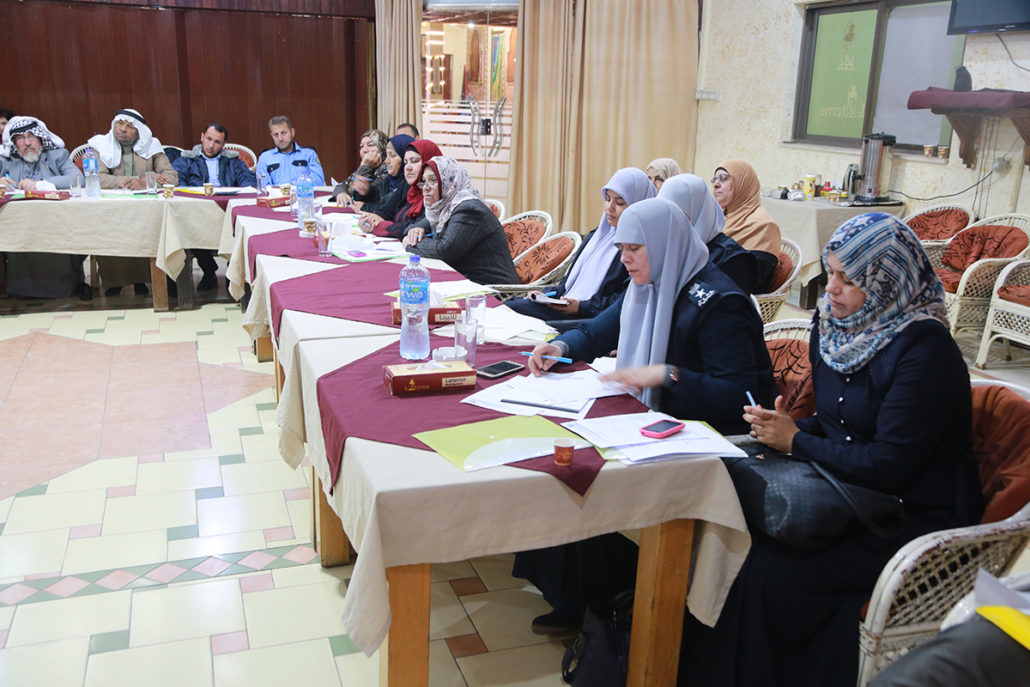
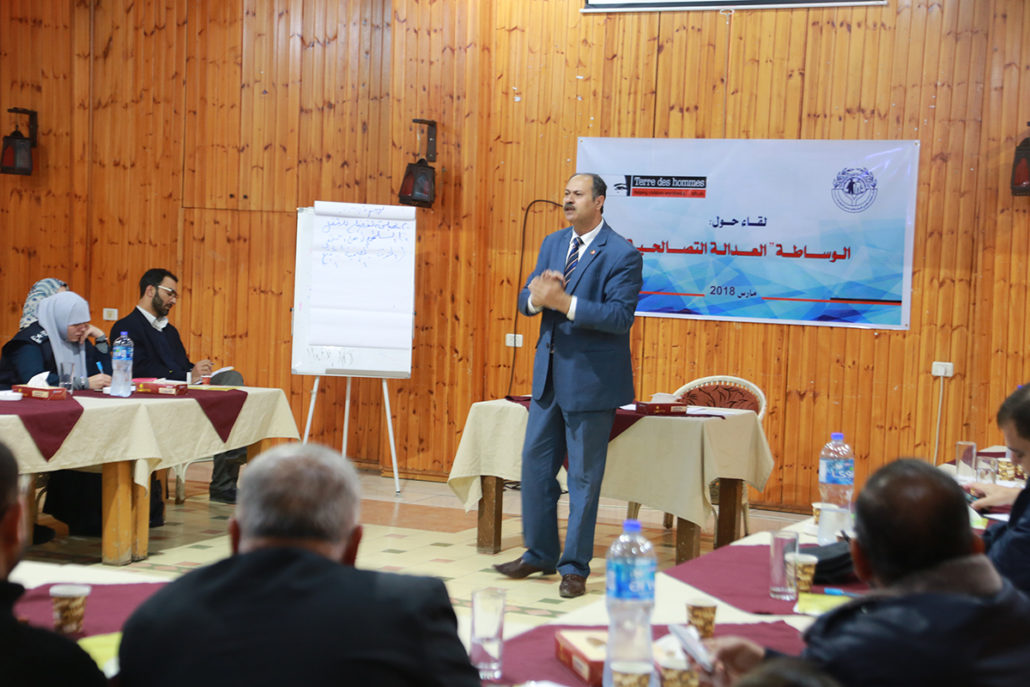
The Palestinian Center for Democracy and Conflict Resolution held a training meeting on restorative justice (mediation) within the Child Justice project, with support from Terre des hommes Switzerland and UNICEF, attended by 14 women and 28 men representing the Ministry of Social Development, the Ministry of Interior, mukhtars, civil society organisations and donors. The agenda of the training meeting was as follows:
The meeting was opened by Mr. Fadi Hamad, a lawyer at the Palestinian Center for Democracy and Conflict Resolution, who welcomed those present and thanked them for their cooperation and attendance.
Mukhtar Abu Islam Al-Atawna also delivered a welcoming address and stressed the need to pay attention to the role of reconciliation committees and to the issue of mediation and restorative justice.
Mr. Mohammed Abdel Bari Attallah, legal adviser and international arbitrator, spoke on the following topics:
Mediation and restorative justice in Decree-Law No. 4 of 2016 on the protection of juveniles; the definition of restorative justice; the characteristics and conditions of mediation; its principles and objectives; the practical benefits of applying mediation for the juvenile offender, the victim and society; and the advantages of mediation for the juvenile offender.
He also spoke about the legal framework for mediation in Decree-Law No. 4 of 2016 on the protection of juveniles: the conditions and scope of applying mediation; the procedures and effects of applying mediation; the stages of the mediation process; the stage of implementing the agreement; the effects of mediation on criminal proceedings; and models of mediation agreements.
The outputs of the training meeting were as follows:
- The need to hold more such meetings in a way that serves the best interests of the juvenile, the victim and society.
- Holding workshops to introduce restorative justice and mediation as an alternative to the courts and their procedures, in a way that serves the disputing parties (the juvenile and the victim).
- Holding meetings and courses on criminal mediation for juveniles and explaining its objectives, practical benefits, conditions and procedures as an alternative to the courts.
- Expanding work in the field of child justice and practical research in a way that serves practitioners in the field, including child protection counsellors, police officers and reconciliation figures, and creating mechanisms for networking and coordination between community notables, the public relations department of the Ministry of Interior and probation officers at the Ministry of Social Development.
- Working to develop the capacities of those working in the field of juvenile justice.