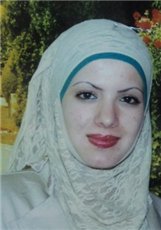
What did I do for you to kill me? Uncle, please, do not kill me, do not throw me into the well!
The university student Aya Ibrahim Baradiya, chaste and virtuous and of high morals according to her friends at university, did not know that her uncle would snatch twenty-one roses from her, destroy her life and throw her into a well with her hands and feet bound. Even her pleading did not spare her before her uncle and his three friends, who were implicated with him in her killing, from carrying out their heinous act. Aya was screaming: "I beg you by God, uncle, uncle, let me go for God's sake, do not throw me into the well. What did I do for you to kill me? Uncle, please help me, do not kill me, do not kill me", and she was thrown into the well. God Almighty said: "And when the girl buried alive is asked, for what sin she was killed." Thirteen months have passed and Aya's question still hangs between heaven and earth: what did I do for you to kill me, uncle? We at Ma'an tried to answer Aya's question, so that her soul may be at peace and she may rest in peace. We went to the chief of police of Hebron governorate, Colonel Ramadan Awad, and met him in his office. He appeared shaken by the horror of the confessions of Aya's uncle, and we were stunned by the details he gave in his confessions to the police investigators. The colonel tried again and again to stop himself from shedding tears, but the details are painful and harsh. Colonel Awad says: "Ibrahim Baradiya and his wife came to us with a report about the disappearance of their daughter Aya, who left home on the morning of Tuesday 20/4/2010 heading for Hebron University. We opened an investigation and began to look into every possibility, including that she had been abducted or had run away from home. We summoned several people and asked them about Aya, among them a young man from the city of Hebron whom Aya's father accused of knowing where she was. We summoned him, he was detained pending investigation, and he was released by the court after thirty-five days in detention." He added: "We took our investigations inside the university's walls and found that she was studying English in her third year, had excellent social relations, was of high morals, had a broad culture and was balanced in her conduct, and that there were no moral or security suspicions surrounding her at all, which is what baffled the investigating officers." We asked the colonel about this young man and his connection with Aya's disappearance. He said: "Ibrahim, Aya's father, believes that this young man, who had asked for Aya's hand, was behind her disappearance, particularly as she loved him and was attached to him, and he had sent more than one person to ask for her hand, but the family refused his request. That is where we started, but after we questioned the young man it became clear to us that he had no information about how she had disappeared." Colonel Awad went on: "The young man was released by the court, and our investigations did not stop from that date, until information reached us last Friday, from our own sources, about the presence of a body inside a water well in the Khallet Abu Suleiman area in the town of Surif north-west of Hebron. This well lies in a remote area about three kilometres from the town of Surif, next to the separation wall." He went on: "We went to the place at the head of a force, accompanied by the public prosecution and the civil defence, to recover the body from the well. The process of recovering and gathering her remains took two consecutive days, from inside the well, which holds more than thirty cubic metres of water. From the same clothes she had been wearing on the day she disappeared, according to her mother's description, it became clear to us that it was Aya Baradiya. A woman's handbag was also found, inside which were Aya's identity card, a photograph of her brother, who is a student in Ukraine, and another photograph with a university card belonging to her younger brother. At that point it became clear to the public prosecution that the body was that of the murdered Aya, and we set out on the investigation from the crime scene, gathering the threads, and a number of suspects were detained." Colonel Awad sighed and straightened in his seat, hiding his eyes behind a bundle of papers on his desk, and cried out that she had been killed brutally, without mercy and without pity. He said: God Almighty said in His noble Book: "And when the girl buried alive is asked, for what sin she was killed", and they carried it out while she was begging them by God to let her go. The colonel says: "Among those detained was Aya's uncle (A.B., 37 years old), and during his questioning he confessed that he had killed Aya with the help of three of his friends." The uncle's confession stated: "On Tuesday morning, while she was on her way from her home to her university in Hebron, we took her and put her in the boot of the vehicle that was with me, and when her screaming grew louder one of my companions sprayed her with gas, so she passed out inside the boot. I drove the vehicle towards Khallet Abu Suleiman, and we brought a rope and tied Aya from her head to her feet while she was unconscious and threw her into the well." "She was alive and breathing in their hands, and as soon as she came round from her unconsciousness she found herself bound and began to scream, as her killer, her uncle, stated. She pleaded with them a great deal and called on the Lord of all creatures for help, and asked her uncle why he wanted to kill her, but he was determined to kill her and with the help of his companions they threw her into the well." Colonel Awad said: "I call on the women's committees and organisations and the defenders of women's rights: you must raise your voices high and not keep silent about this heinous crime, and demand that the harshest penalties be imposed on the criminals, so that Aya's story may be a sign and a lesson for anyone whose soul tempts him to deprive a human being of life. I urge Palestinian society to keep away from tribal fanaticism, and religious figures, scholars and imams, to forbid this and not to hang their defiled and hideous acts on the peg of family honour, and not to take from the true Islamic religion only what suits them, for religion is as innocent of them as the wolf was of Joseph's blood, peace be upon him." He added: "We in the police will pursue those who think with this mentality in order to cleanse our Palestinian society of them. What sin did this girl commit for her to be killed in such a brutal way, merely because her uncle suspected there was a relationship between Aya and the young man who had asked for her hand and had come to them at the door more than once? What kind of mentality is this?" Colonel Awad, chief of police of Hebron governorate, sighed and said: "The echo of her mother's words still rings in my ears, when she learned of her daughter's killing and said: shame on you, this is Aya the pure, this is Aya the chaste and virtuous. You snatched her from my hands and she was killed at your hands in cold blood." As fate would have it, I met Aya's uncle face to face in the office of the head of the investigations department in Hebron governorate, Major Hassan Jabarin, and after I learned who he was I wanted to ask him: why did you kill Aya? Why, why? But Major Jabarin asked me not to put questions to him, in order to preserve his rights. I tried to get around him and directed my question to Aya's uncle: why did you kill Aya? But Major Jabarin asked him not to answer and asked me to leave the room. God Almighty said in His revelation: "A disavowal from God and His Messenger..." I left the police directorate and began to look for the young man who had asked for Aya's hand and for whom her uncle had killed her, believing there was a relationship between them. I made some calls here and there until I reached him. I called him and asked to meet him. On the way to this young man's house, who refused to let me disclose his identity, I discovered through my calls that his marriage contract had been concluded on the evening of last Friday, that is at the same time Aya's body was discovered. Glory be to God: his vindication came from God, who wished to honour him on the day he contracted his marriage to another girl. As soon as this young man learned from me that Aya's killer had confessed, and was awaiting trial to receive the punishment he deserves, he said: "Who appointed him to kill her? Why did he not take her to a doctor? And why should her uncle be the one to kill her and not her father, although I am against that too? Where did her uncle invent a relationship between me and her? What kind of mentality does he have and what a vivid imagination. May God have mercy on Aya and grant her a place in His paradise, and may God forgive her family, who dragged out the process of accepting me as a husband for her." This young man says: "This is not an uncle and he is not a human being, he is a beast. It is a shame that the fate of a delicate, sensitive woman, mature in thought and culture, should be this fate. May God have mercy on her and take revenge on her uncle." The young man casts his memory back a year, when he got to know Aya and admired her, so he sent his mother and his sister to her house to ask for her hand, and no reply came from her family. So he asked some friends to intervene with her family to speed up the engagement and marriage, and her father agreed; then a few days later her brother objected, and several figures intervened to persuade her family to agree to the marriage, until her uncle intervened. Before he could finish his story I put the question to him: why were you so insistent on marrying Aya? He said: "My love for her. I was insistent on marrying her because I admired her and loved her. Her family objected sometimes to the age difference between us, since I am thirty-seven years old and she was twenty-one, at other times because I am from the city, and at other times because of my political affiliation, and all these pretexts only increased my determination to marry her according to the way of God and His Messenger. For the record, only one month passed from when I got to know Aya until she disappeared." The young man recalled what happened a few days before Aya's disappearance, saying: "Three days before Aya disappeared she was speaking to me on her mobile phone and was beaten for it by her brother. She called me from her uncle's mobile and told me what had happened, and told me she was going with her uncle to the Obeidiya area, and it was night. I never saw her uncle's face; he spoke to me on the mobile and promised me he would help me and help Aya, and this talk brought joy to my heart and to Aya's, and I did not know he was plotting evil for us. Aya returned home, and the next day her uncle asked her to go with him for a drive around the town at night, so I asked Aya not to go out with him at night even if he was her uncle and would help us." Why did you ask her not to go out with her uncle? "At first I agreed that she should go out with her uncle after her condition had improved, following the beating she received from her brother because she had been speaking to me on the mobile. But the second time, there was no reason for her to leave her house with her uncle at night. If he wanted to talk to her he could do it at home." He added: "On the third day, the day of her disappearance, Aya called me to tell me she was going to university. It was her habit to call me when she left the house for university, and likewise when she arrived at the university or when she left the university and got home. Half an hour passed and Aya did not call me, so I called her, to no avail, and I stayed like that calling her until I heard the automated reply that the phone I was trying to reach was switched off. I called her sister and asked her about Aya and told her what had happened, and she told me she knew nothing about her. I went to my neighbour at home, Mr. Ashraf Mishaal, who is head of the prosecution for northern Hebron, and told him the story, and he asked me to get her father's permission before doing anything. I did indeed call her father, who told me he was going to the police to file a report about her disappearance, and I went to the ambulance and emergency service of the Red Crescent, to Hebron government hospital, to the Ahli hospital and to Al-Mizan hospital, to no avail. At night members of the general investigations came and asked me to go with them to the police directorate, and there I was charged with abducting Aya, and I remained in detention for 35 days, during which my health deteriorated badly, and the court released me on the recommendation of the public prosecution." This young man said: "I have recovered from the illnesses that came over me, and may God have mercy on Aya. I do not want anyone to know who I am, because I have begun a new life and my wife has a right over me to live with me in reassurance, peace and love. I told her what had happened to me earlier and she understood the situation I was living through." This young man could not hold back his tears when he said: "Aya was wronged and they killed her in cold blood and brutally, and I was wronged along with her. May God have mercy on her and grant her a place in His paradise." Investigation by Mohammed Al-Uwaiwi, Ma'an News Agency