Conflict Resolution Center holds a workshop on the situation of women inmates in correctional centres in Gaza
Gaza, Publication and Information Unit:
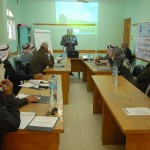
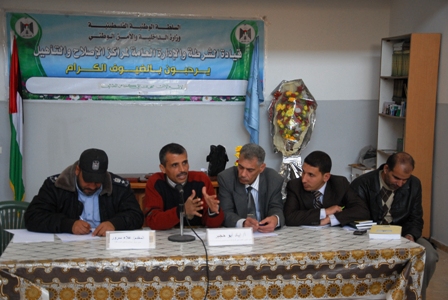
The Palestinian Center for Democracy and Conflict Resolution, within the project for supporting and empowering abused women, held a workshop entitled "The legal and social situation of women inmates in correctional centres" in the conference hall at the central prison in Gaza City on 6/12/2011, with the participation of a number of reconciliation figures and police officers and representatives of the correctional centres.
This workshop comes within the events of the 16 days campaign to combat violence against women in several governorates in the Gaza Strip and the West Bank. At the start of the meeting, the director of the Conflict Resolution Center's Gaza branch, Iyad Abu Hjair, explained that his Centre had signed a memorandum of understanding with the prisons and rehabilitation administration with the aim of supporting male and female prisoners. He stressed that this workshop is the first activity with the correctional centres and that the coming days will see more events and programmes dedicated to supporting male and female inmates in the prisons.
For his part, the director of correction and rehabilitation in western Gaza, Alaa Sorour, spoke about the main services the correction and rehabilitation centres provide, from legal advice to health care for prisoners through a number of clinics located in the centres. He added: "We carry out several programmes for women inmates, among them a special employment programme for the benefit of the inmates in coordination with the prisons administration, in addition to providing psychological and social support and counselling services."
On the social and psychological situation of women inmates, Salah Al-Araj, the psychological and social counsellor, spoke about the situation of women inmates in the correctional centres and the main social problems they suffer from, among them feelings of frustration and psychological distress. He called for increasing coordination between the correctional centres and the Ministry of Social Affairs and civil organisations in order to ease the psychological crises the women inmates suffer inside the prisons.
For his part, the lawyer of the project for supporting and empowering abused women, Mohammed Abu Salem, said: "International law, the international conventions and Palestinian domestic legislation have set out the need to provide legal protection for women inmates in the correction and rehabilitation centres, among them the Universal Declaration of Human Rights of 1948." He pointed to the need to provide a lawyer for a woman inmate during investigation, not to hold women inmates in prison for longer than the period allowed by law, and to the principle of public hearings and the speed of the procedures taken against women held in detention.
The participants recommended working on holding a series of social and legal studies on women inmates, seeking their social rehabilitation, training the staff working in the correction and rehabilitation centres, and ensuring the inmates' participation in internal activities and events to guarantee that positive behaviour develops in them.