
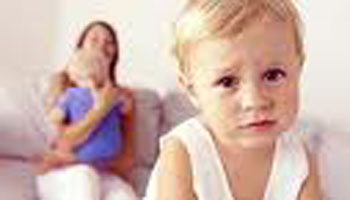
The problem of jealousy in children
By the psychologist Shireen Al-Bayari. Jealousy is an emotional state compounded of possessiveness and a feeling of anger caused by an obstacle, accompanied by internal and external physiological changes, which a child usually feels when he loses privileges he used to enjoy, or when a new baby appears in the family, or when another child succeeds at school while his own lot was failure and disappointment. The child refuses to disclose or admit these compound feelings and tries to hide them, because showing or disclosing them increases his feeling of humiliation and inadequacy. Causes of the problem of jealousy in a child: 1. The child's feeling of inadequacy and his passing through frustrating situations: such as a lack of good looks or of economic needs such as clothing and the like, and the child's passing through frustrating situations or his repeated failure. This feeling grows and becomes fixed as a result of the parents' poor treatment and their harshness with him and their mockery of that failure. 2. The child's selfishness, which makes him want to have the greatest share of his parents' attention. 3. The arrival of a new child in the family. 4. The family's economic circumstances, for some families have a low income or are very miserly towards their children compared with other families, so that the seeds of jealousy grow in the child's soul as a result of not getting what he wants from his family. 5. Favouritism among the children, for some families prefer boys to girls, or the younger is favoured over the elder and so on, so that jealousy grows among the children. 6. Frequent praise of siblings or friends in front of the child and showing their good qualities before him. Negative ways of expressing jealousy: 1. By screaming and tampering with others' belongings or stealing or destroying them. 2. By physical assault, hitting or pinching. 3. By causing disturbance and hurling insults. 4. When the child grows older (after ten), jealousy takes the form of spying, telling tales and getting others into trouble. 5. In young children jealousy appears through feigning excessive love towards the new baby in order to hide buried feelings of jealousy. And if the opportunity arises the jealous child will harm his sibling by hitting or biting. To treat the problem of jealousy in a child we suggest the following: 1. That we instil in the child confidence in himself and encourage him to succeed, and that when he fails at one thing he will succeed at another. 2. That we avoid punishing him or comparing him with his friends or siblings and showing his weaknesses and shortcomings, for comparison creates jealousy among siblings and friends, and that we keep him away from situations of unfair competition. 3. That we teach him that there are individual differences among people and give him examples of this. 4. That we instil in him a love of honourable competition and that failure is not the end of the road, but that failure may lead to success. 5. Encouraging him to express his emotions in a balanced way. 6. Making the child feel that he is accepted as he is by the family and that others' excellence does not mean that this will lessen the family's love for him or shake his standing. 7. If a new baby joins the family and you notice your child's jealousy of him, do not restrain or scold him; rather let him help you care for the baby in matters within his ability, and praise him and give him a sense of responsibility and watch him from a distance without his noticing. Do not show your attention to the new baby while he is watching, and do not let him feel that this baby has taken your love from him, and always be alert to the child's behaviour and correct his mistakes gently and tactfully. 8. Accustoming the child from an early age to avoiding selfishness, individualism and self-centredness, and that he has rights and duties upon him, and explaining correct behaviour to him. 9. Including the child in activity groups and sports teams. 10. Equality among siblings, good treatment, and avoiding excessive pampering. 11. A calm family atmosphere and keeping away from problems and disputes. 12. Not giving the child the opportunity to become excessively attached to them, and keeping the relationship with the child very good and normal and not exaggerated. How to deal with your child before the new baby arrives: receiving a new baby into the family circle is distressing for the first child or for children under three years old, for at this age each of them prefers to be the only one for their parents and does not want anyone to share their affection and attention, particularly the first child who is used to being the centre of everyone's attention without a rival. So do not be alarmed if you see your little one keeping watch beside his infant brother's cot, returning to him whenever you move him away. His hand may reach out to him out of curiosity and to explore this new creature, which causes anxiety about this eager child. The matter may be different for the second or third child, who is used to sharing his parents' attention and affection with his older siblings. But this does not mean that the second or third child does not feel rivalry towards the new baby: the feeling is there, but what matters here is how the parents deal with this situation and ease the intensity of his feeling of jealousy towards his sibling and turn it into a positive feeling. Symptoms of jealousy: the most common symptom of children's jealousy is an increase in the child's demands in order to draw his family's attention to him, for he wants his parents to carry him and walk about with him, particularly when he sees his mother busy with the new baby. As for the remaining symptoms, they include behaving like an infant again, such as putting his thumb in his mouth or wetting or soiling himself, and he may tend towards violence and aggression in his behaviour, such as handling the baby roughly. All these symptoms are natural, and in addition to the fact that some of them can be prevented, the rest may improve within a few months. Children's jealousy of the new baby can be prevented starting from the period of pregnancy, through the following: Prepare the older child to receive his new sibling by talking to him about the pregnancy and letting him feel the foetus's movements too. Give the child the opportunity to observe a newborn at close hand so that he has a better idea of the coming baby. Encourage the child to help you prepare the baby's room. Move the child's bed to another room or to a new bed several months before the new baby arrives, so that he does not feel he has been pushed aside because of the new baby, and if you are going to enrol the child in kindergarten, do so well before the due date. Tell the child where you will leave him and who will look after him when you go into hospital, if he is not going to stay with his father at home. Look at the family photo album with the child and talk to him about the first year of his life or the life of one of his older siblings. And when you go into hospital for the birth, follow the following: Call the older child on the phone and ask him to visit you at the hospital, for many hospitals allow this, and if it is not possible for the child to visit you at the hospital, send him a gift as though it were from the new baby. Encourage the child's father to take him on some outings. And after leaving the hospital and returning home, be careful to do the following: When you enter the house, spend the first moments with the older child, and let someone else carry the new baby instead of you. Ask visitors to give a great deal of their attention to the older child, and let the child open the gifts that come for the new baby himself. From the start you should always refer to the new baby as "our baby". During the first months of your newborn's life, give the older child a greater share of the attention and care he needs, and try to make him feel that he is more important than anyone else, and sit with him for at least half an hour without interruption every day. Make sure that the father and relatives spend extra time with the child, particularly in the first month, and give him plenty of tenderness yourself throughout the day. And if he asks you to carry him while you are feeding or rocking the baby, involve him in the care, or at the very least you can talk to him while you are busy caring for your baby. Encourage the child to touch the baby and play with him, on condition that this is in your presence, and allow him to hold him while sitting in a chair with arms on both sides (to prevent the baby slipping), and avoid warning him with words such as "do not touch the baby", for the baby is not that fragile, and it is essential to show the child how much you trust him. But a child is not usually allowed to carry the baby until he reaches school age. Let the child help you in caring for the baby: encourage him to help you wash and dry the baby and bring the nappy, or to look for his toy or his dummy. Sometimes encourage him to play with his doll (whether by feeding or washing it) while you are feeding or washing the baby, and assure the child how much the baby loves him by saying to him: "Look at him, how happy he is when you play with him" or "You can always make him laugh". Do not ask the child to keep quiet for the baby's sake, for newborn children can sleep well without silence reigning over the house, and such a request may cause the child needless resentment. Do not criticise your child if he imitates his infant sibling in crying or other behaviour, for this is temporary. Intervene at once at any violent behaviour by the child towards his infant sibling, by separating him and taking him away without scolding or hitting, because punishing him will make him keep trying to do the same thing to the baby by way of revenge. So always talk to him about the need to be merciful and kind to the little one and not to hurt him, because he is a weak creature. And if the child is somewhat older, encourage him to talk to you about his conflicting feelings towards the new baby, and then set him an alternative behaviour, such as saying to him: "When you feel angry with the new baby, come and give me a long hug." How the feeling of jealousy shows in a child: jealousy shows in a compensatory, feigned manner, where the child hides his real feelings and plays the part of an actor towards his newborn sibling, taking to embracing and kissing him, when in fact he wants to pinch or hit him. On the other hand jealousy appears clearly in aggressive behaviour directed at the little one. The child also deliberately draws attention to himself and turns his resentment onto his mother, who gives her attention to the little one and not to him, so he begins here to take revenge and feigns illness, or cries, or becomes stubborn and negative. One of the ways of drawing attention is the child's regression to earlier childish behaviour patterns, such as going back to drinking milk from a bottle, sleeping in the baby's cot, wetting the bed at night, speaking in a babyish way, sucking his thumb, clinging to his mother, and staying in her lap whenever she tries to pick up the little one.