Conflict Resolution Center calls on the Palestinian government to enact a minimum wage law in the West Bank
Nablus, Publication and Information Unit:
The Palestinian Center for Democracy and Conflict Resolution called on the Palestinian government to enact a minimum wage law by activating the role of the labour unit, providing specialised courts to follow up workers' just cases, and increasing cooperation between organisations and the Ministry of Labour to follow up workers' rights in local establishments and factories.
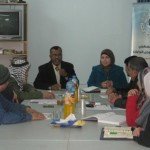
These recommendations came after holding 12 workshops and meetings with a number of governmental and civil society organisations in Nablus governorate, within the Active Citizenship project for adopting a minimum wage law, which the Conflict Resolution Center carries out in six governorates, namely Nablus, Tulkarm, Jenin, Hebron, Bethlehem and Jericho, in cooperation with Catholic Relief Services (CRS) and with funding from the United States Agency for International Development (USAID).
In this context, the director of the Conflict Resolution Center in Nablus governorate, Ahmed Abu Ayyash, stressed that enacting a minimum wage for workers will improve the standard of living of the poor and marginalised classes and help reduce the disparities between the different groups of workers. He added: "Enacting the law will work to achieve social justice in distributing income and help achieve and ensure civil peace by treating the wronged groups of workers fairly and encouraging employees to improve their performance and increase productivity and competitiveness in the local market."
For his part, the coordinator of the Active Citizenship project for adopting a minimum wage law, Issam Odeh, explained that workers' economic conditions are growing more acute amid the wave of sharp price rises that has affected foodstuffs and basic goods and that weighs on citizens. He pointed to the need to shed light on the extent of the injustice done to women working in sewing, kindergartens and cleaning, who receive a low daily wage of between 20 and 30 shekels, and on employers' exploitation of male and female workers.
Odeh went on to say: "We have been in contact with the Ministry of Labour, and particularly the inspection department, about the need to provide a greater number of inspection staff to follow up workers' cases in factories and industrial workshops in the West Bank governorates and to provide them with legal and rights-based assistance in the coming period." He explained that health insurance and the workers' retirement law cover only the hospitals in the governorate where the worker lives, as well as the problem of the failure to enact the retirement law, which needs serious follow-up by the government's decision-makers in support of workers.
At the close of the workshops, the workers taking part in the meetings and workshops stressed the urgent need to increase awareness and guidance about workers' legal and labour rights, given employers' practices towards workers of arbitrary treatment and injustice and their failure to abide by the rights of the Palestinian worker.