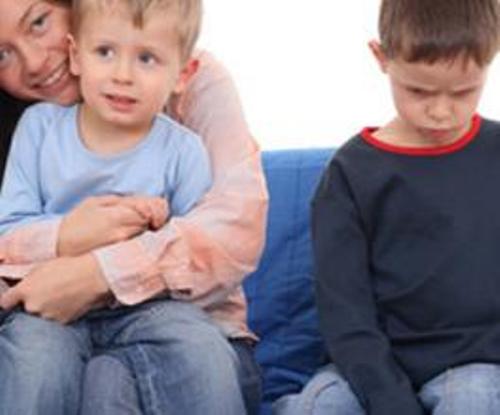
Jealousy among children: why does it happen, and how do we deal with it?
Jealousy is considered one of the natural human feelings in a child, for a little of it forms a motive for development and competition, but a great deal of it spoils life. Aggressive behaviour and selfishness are considered among the effects resulting from jealousy in children, and it may become a habit that appears continuously, and here it becomes a problem whose causes and treatment must be examined.. How does jealousy form? When the time for the birth of the second child in the family draws near, the first is kept away from his mother during the period of her stay in hospital, and when she returns home she is exhausted and wishes to rest. But the child longs for her tenderness, which he has missed during the past period, and she finds no time to give him this tenderness. And after her rest, care is directed to the newborn, and the time she gives the elder child decreases. Relatives and friends arrive to offer congratulations on the new guest, to whom all the time is given and on whom the lights are focused after they were withheld from his brother, since he is constantly in his mother's embrace. So the elder goes to his bed with a broken wing, and in his mind is the thought that he has lost his mother's love for him. And after he grows a little he notices that he is punished for things his little brother is allowed to do, and he does not know a reason for that, or he is too young to know the reason, and the feeling of jealousy grows in him day after day as a result of comparison or favouritism. The causes of jealousy in children: a) Weak self-confidence: the weakness of trust between the child and those around him forms a factor that helps the appearance of jealousy. Likewise the weakness of the child's confidence in himself and his abilities leads to an intense feeling of jealousy, since he always looks at others as better than him and cannot perceive his personal abilities in which he excels them. This is particularly so when this child is disabled or ill and feels the difference between him and the other children. b) The birth of a new child: it is observed that the child at the beginning of his life usually draws everyone's attention and feels that everything is for him and that all attention is directed towards him. But this great care may stop suddenly or gradually as he grows, and may move to the newborn or to another person in the family. This change may lead to a tendency to revenge or to embarking on behaviours that draw care and attention to him again: such as weeping, bedwetting or pretending to be ill, etc. c) Distinguishing the treatment of some children over others or between males and females: which creates conceit in some children and stirs the resentment and jealousy of others. Its symptoms may appear in other forms in the future. Among the forms of discrimination is also giving many privileges to the child when he is ill or disabled, which stirs jealousy in the healthy brother and sometimes makes him wish for illness and hate the sick child. The effects that follow from a child's jealousy: the jealous child shows feelings of unusual behaviour in general as a result of his feeling that he has lost the love and tenderness he used to enjoy from his parents, and these feelings may turn into aggressive behaviour, either towards the small child considered a rival to him after he took over his throne in his mother's embrace, or directed towards the parents or towards personal property by trying to damage and destroy it, in addition to mood swings and dissatisfaction with the gifts that may be offered to him by those around him, however expensive, as an attempt on their part to compensate him for the tenderness he has lost. And if he accepts them, that is temporary, and he soon remembers the greater gift he has lost, namely the mother's warm embrace, which he would not exchange at any price. Among the symptoms that may result from jealousy is a state of bedwetting that did not exist before, as if the child wished to return to the earlier age stage so that his mother would care for him as she cares for his little brother. This behaviour is nothing but one of the attention-seeking behaviours the child resorts to in order to demand from his parents his lost right. In this case the mother must make every attempt to make her child happy, by avoiding reproach, rebuke and punishment, which may make the matter more complicated, even if he harms his little brother. For our whole aim is to make him play with him and help his mother in serving him, instead of isolating him from him and so raising hatred between them from childhood. In the event that he hits him or injures him, the mother should take him away at those moments and keep him occupied, without reproaching him, but rather giving him love and security. To reduce the phenomenon of jealousy, the parents should follow the following: - Preparing for the reception of the newborn, and creating a relationship of love between the siblings, so that when the newborn arrives his brother feels that he is dear to him and not a rival. - Moderation in showing love and compassion to the newborn, particularly in front of his siblings. - Reducing the praise of some children in front of their siblings, and each child must be considered an independent personality with its own merits and aptitudes. - Equality in treatment between males and females, because discrimination stirs jealousy and leads to girls feeling hatred towards the other sex in the future. - Not exaggerating in lavishing many privileges on the sick child, which makes him pretend to be ill more and stirs jealousy in his siblings towards him. - Continuing to care for the first child and to love him and meet his necessary needs. - Not making the elder feel that the time and attention given to his little brother is an obstacle to fulfilling his wishes. - Assigning the first child a set of tasks that he carries out towards his little brother, protecting him and giving him some gifts. - Not comparing children in their various abilities, inclinations and ages, and taking into account the needs of each of them in a way suited to the nature of the age stage they are passing through. In conclusion, the permanent individual differences between siblings must be taken into account whatever they may be, and individual comparisons that lead to jealousy must not be provoked. This of course does not prevent showing the good sides and the points of strength in each of them, and trying to develop them and care for them. And the mother's warm, tender embrace, which does not fail the child however old he grows, remains his first and last refuge, which deals with the psychological and social problems he faces, and supports him in overcoming all forms of anxiety, fear and weak self-confidence, thereby increasing the chances of success, reducing experiences of failure, and developing the capacity for social cooperation between him and his peers and for loving them. By Rouhi Aydat, educational psychologist