You are here:Home1/Blog2/Activities & Events3/The Palestinian Center for Democracy and Conflict Resolution holds a public meeting in cooperation with Idhna Municipality…
The Palestinian Center for Democracy and Conflict Resolution holds a public meeting in cooperation with Idhna Municipality and Beit Ula Municipality
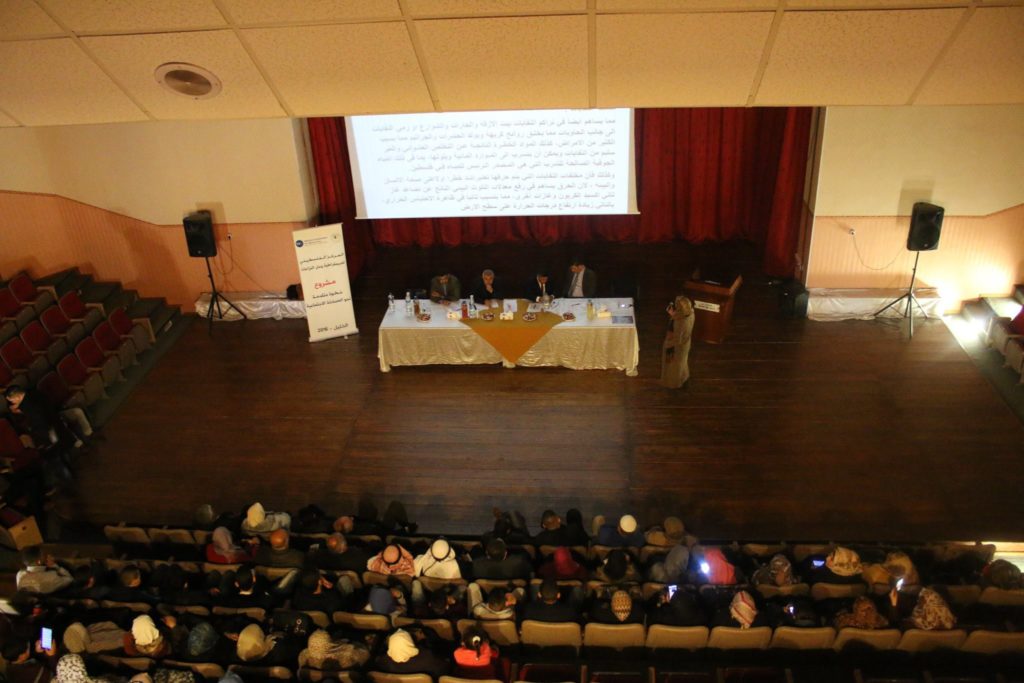
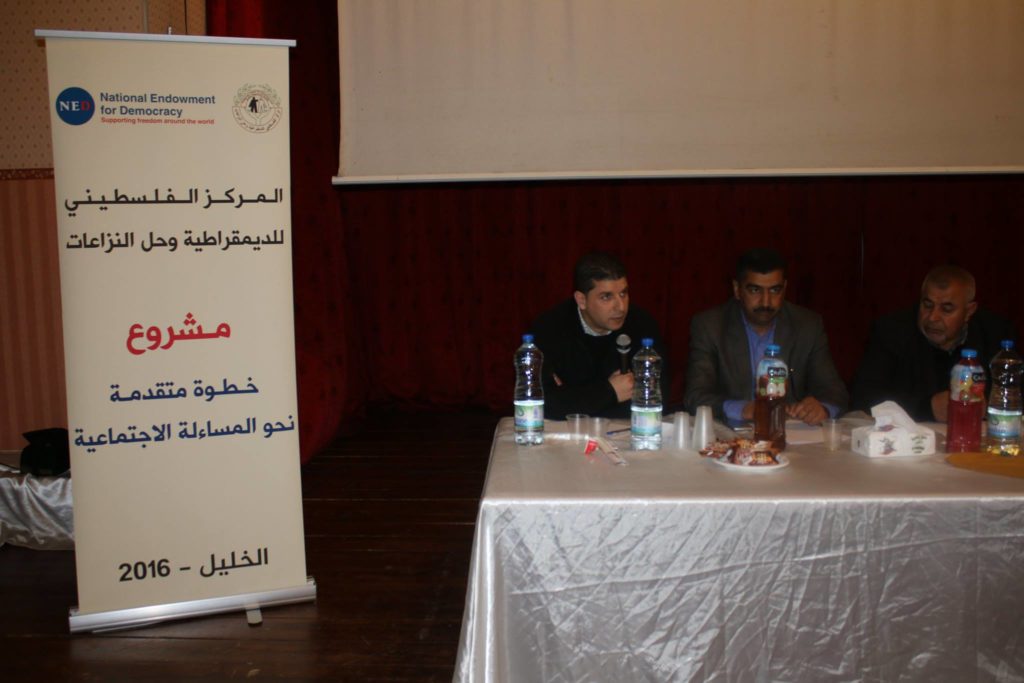
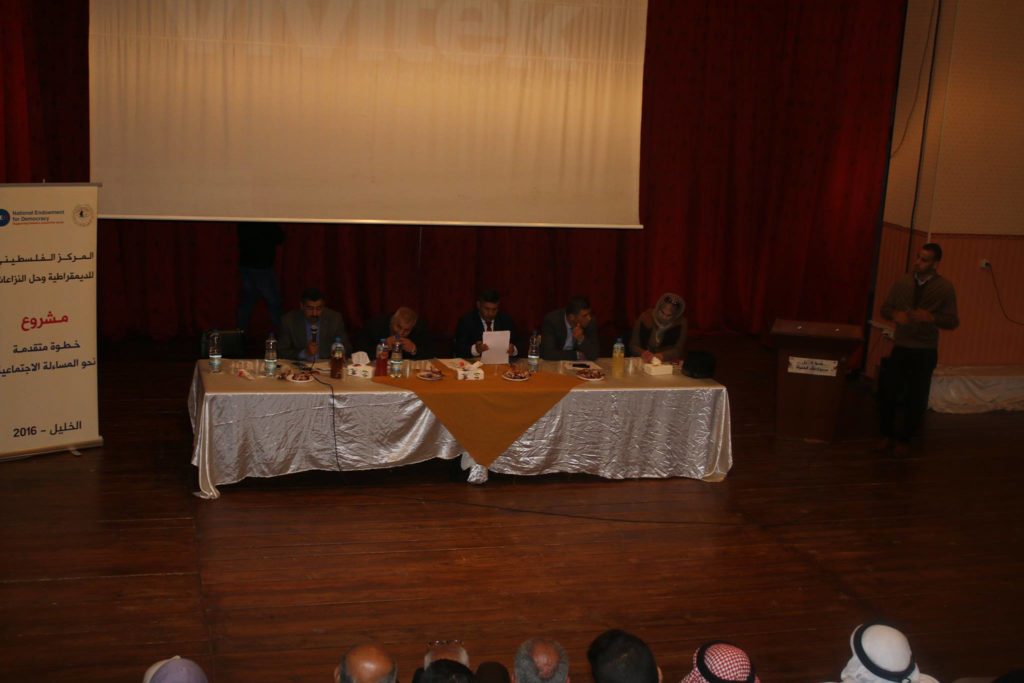
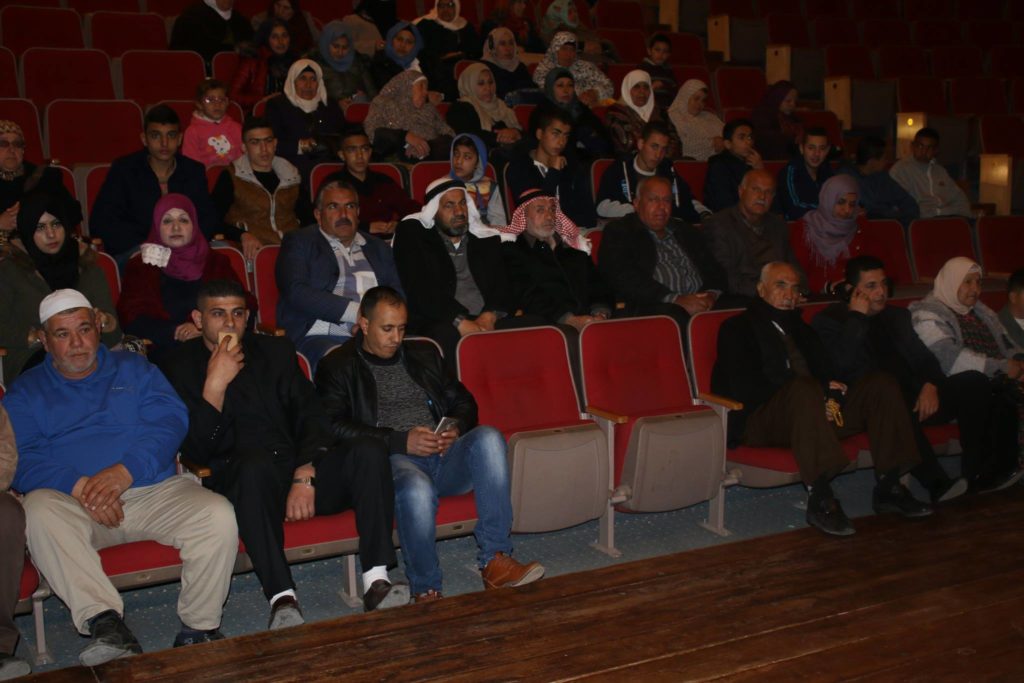
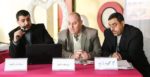
The Palestinian Center for Democracy and Conflict Resolution, Hebron, held a public meeting in cooperation with Beit Ula Municipality and Idhna Municipality on the subject of waste, at the Is'ad Al-Tufula auditorium in Hebron, attended by members of the public from different segments of society, representatives of Hebron Governorate, representatives of the Directorate of Education and the Hebron Health Directorate, as well as a number of women's associations. The meeting followed several hearing sessions and debates held with the social accountability team and the above-mentioned municipalities on the subject of waste, its dangers, its causes and the intervention mechanisms to solve this problem.
This was part of the lobbying and advocacy campaign delivered by the project "An Advanced Step Towards Social Accountability", which has raised awareness of social accountability in achieving democracy, as well as qualifying and empowering young people to use dialogue and discussion techniques to bring about change and improve the services provided by municipalities.
The main speakers at the public meeting were the mayor of Beit Ula Mr. Mohammed Al-Amla, a representative of Idhna Municipality Eng. Abdel Rahman Tumaiza, Mr. Bahjat Al-Jabareen of the Environment Quality Authority, and Eng. Abdel Hai Arafa of the Joint Services Council. The meeting was facilitated by student Ezz Al-Rajoub of the social accountability team.
At the start of the meeting the Centre welcomed those present and introduced the Centre, its activities and events, then introduced the project, its objectives, activities and target groups. It then summarised what had been agreed with the municipalities in the hearing sessions on waste through a PowerPoint presentation, which addressed the waste problem and its negative impact on citizens' health and on the environment. The presentation also set out the municipalities' needs, leading to a question about the resources expected from decision-makers and officials to deliver services and meet municipalities' needs, and the extent of their intervention to solve this problem.
To answer this question, a discussion was opened between officials from the Joint Services Council, the Environment Quality Authority and the municipalities, with the participation of those present. Eng. Abdel Hai Arafa affirmed that the services provided by the Council to municipalities and citizens have improved, but that responsibility for solving the waste problem lies with all parties and not one side alone, stressing that the cost of the required services is very high compared with citizens' low income and that the Council does not set these prices, which is why waste is a loss-making issue. Mr. Bahjat Al-Jabareen spoke about the implementation of a national waste plan that applied from 2010 to 2016, noting that a new strategy and a comprehensive plan are now needed, to be applied, implemented and followed up by all the parties concerned. He stressed that there are currently no sanitary landfills apart from one in Bethlehem and in Hebron city, so sanitary landfills must be organised, and noted the need to raise citizens' awareness so that they report the locations of waste and informal dumps in order to intervene and solve the problem. He also noted that the Environment Quality Authority had distributed three types of waste containers, but that citizens did not grasp the issue of sorting waste into the containers, which created a bigger problem: citizens therefore need awareness raising first when it comes to service delivery.
The discussion also addressed the need to improve performance in waste recycling, particularly as some landfills cannot take certain waste such as car waste, which requires structural plans for intervention, targeting all segments of society and distributing roles among them in terms of awareness raising, education and developing a sense of responsibility and national belonging, so as to avoid wasting human, civilisational and cultural resources.
The mayor of Beit Ula also commented on the problems facing the municipality, whether the severe shortage of waste collection staff or the number of waste vehicles: there is only one, very old and worn out, which does not meet the required needs and represents a major obstacle to the municipality in solving the waste problem. Eng. Abdel Rahman Tumaiza of Idhna Municipality noted that Idhna is distinctive in its population density compared with the town's small area, so the waste problem is extremely serious, particularly as the municipality loses between 40,000 and 50,000 shekels a month because of it. He noted that the town produces 20 tonnes of waste a day, and that regarding the town's archaeological sites the municipality carries out an annual cleaning campaign with the participation of community organisations to clear these sites of waste and preserve their features. He stressed the importance of the role of the family, institutions, schools and mosques in raising citizens' awareness of this problem in order to help develop the necessary solutions.
At the end of the meeting, the Centre thanked those present, and a number of recommendations were produced, most importantly: delivering awareness and education programmes in schools, institutions and mosques on waste; providing areas with metal and plastic containers with lids suited to the growing population distribution; establishing sanitary landfills and recycling waste. Those present stressed the importance of monitoring and inspection and of establishing a legal deterrent.
https://pcdcr.org/wp-content/uploads/2017/01/16300455_998747960257268_8309008764157382560_o-e1485765508399.jpg600900Adminhttps://pcdcr.org/wp-content/uploads/2023/03/logo-300x300.pngAdmin2017-01-30 08:38:452017-01-30 08:38:45The Palestinian Center for Democracy and Conflict Resolution holds a public meeting in cooperation with Idhna Municipality and Beit Ula Municipality