The legal department at Conflict Resolution provides in-kind assistance to women inmates at Ansar prison in Gaza
Gaza, Publication and Information Unit:
The Palestinian Center for Democracy and Conflict Resolution, through the activities of its legal department, provided a range of in-kind assistance to the women inmates at the General Directorate of Reform and Rehabilitation at Ansar prison in Gaza City.
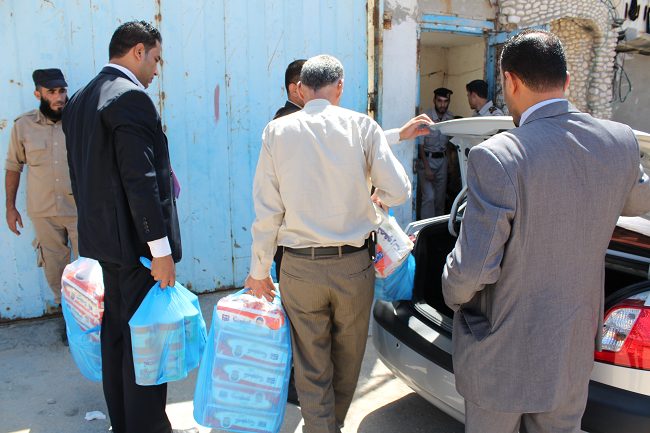
The assistance was provided during a visit by a delegation from the Centre to Ansar prison, comprising the head of the legal unit at Conflict Resolution, lawyer Younis Al-Tahrawi, his deputy, lawyer Ahmed Al-Masri, the coordinator of the project "Stronger oversight, better justice", lawyer Anwar Azzam, and the Centre's media coordinator, Saji Al-Shawa. They were received by Lieutenant Colonel Sameh Hamdan, director of Ansar prison at the General Directorate of Reform and Rehabilitation.
At the start of the meeting, lawyer Al-Tahrawi explained the importance of helping male and female inmates and of working to close some outstanding files for a number of inmates, as well as supporting the women inmates materially and morally amid the harsh conditions the Gaza Strip is passing through. He added: "We hope efforts will be joined between our Centre and the Reform and Rehabilitation Directorate to improve the rehabilitation situation for inmates in the coming period."
For his part, Lieutenant Colonel Hamdan thanked the legal department team at the Conflict Resolution Center for their generous visit and for its importance in supporting the male and female inmates, who receive good treatment from the management of the reform and rehabilitation centres. He expressed his pleasure at the achievements being made since the memorandum of understanding signed between the Directorate of Reform and Rehabilitation Centres and Conflict Resolution at the start of last year.
During the meeting, the delegation reviewed the procedures and legal situation of a number of women inmates whose cases the Centre's legal department is following, and the in-kind assistance was distributed, comprising a number of basic items and necessities alongside some toys for the inmates' children.