Conflict Resolution holds a meeting for mosque imams to strengthen their role in ending the hateful division
Hebron, Publication and Information Unit:
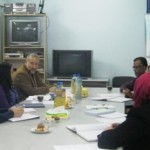
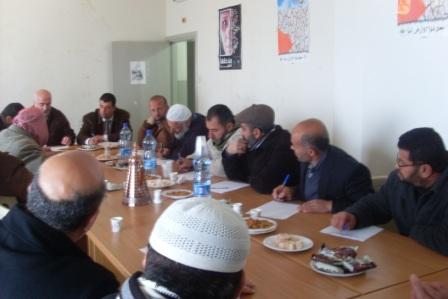
The Palestinian Center for Democracy and Conflict Resolution held a meeting for mosque imams to strengthen their role in ending the hateful division, held at the branch premises in the city of Hebron with the participation of 20 imams and mosque preachers, all of whom agreed on the need to end the division and unite the Palestinian ranks. It was held within the Civil Peace project, funded by the National Endowment for Democracy.
For his part, Mr. Saad Shalaldeh, coordinator of the Conflict Resolution Center branch in the city of Hebron, stressed the role of mosque imams in Friday sermons in urging an end to the division, setting out the religious view of the division and explaining the harm it causes to society and its effect on the unity of the Palestinian ranks.
Sheikh Mohammed Al-Duwaik, head of the mosques department, spoke at the meeting about the division from the religious point of view, stressing that Islam forbids division and discord. Al-Duwaik urged unity among the followers of one faith and cited evidence for this from the Qur'an and the Sunna, in the words of God Almighty: "Indeed this, your religion, is one religion, and I am your Lord, so worship Me." From the Sunna he cited the prophetic saying: "Beware of discord among you, for it is the shaver."
He added that the division has done away with the culture of unity and strengthened the culture of strife, has ended the signs of solidarity and cooperation between people, has brought a new alphabet to prevail in the homeland, of intimidation, imprisonment and persecution, and has made the Palestinian cause a leaf in the wind abroad, so that we have been judged to be on scorched earth.
Al-Duwaik warned that we are in a bad state and a bad reality, while most of the people are Muslims and there is scarcely one among us who has not lived through oppression, torture and captivity at the hands of the occupation, which makes it imperative for us to end the division.
He called for a reconciliation that is clear and serves everyone, not a mere word or ink on paper, but one built on cleansing hearts of resentment, guided by the voice of religious law and conscience, and making the sanctity of blood and of holy places a priority for everyone, so that we end the hateful division.